In today’s highly competitive flour processing industry, flour quality directly affects customer satisfaction, bakery performance, food safety, and brand reputation. Whether supplying bakeries, noodle factories, food manufacturers, or retail markets, wheat flour milling plants must continuously optimize production processes to achieve consistent flour quality.
From wheat cleaning and conditioning to milling, sifting, and storage, every stage influences flour color, ash content, particle size, gluten performance, and overall flour consistency. Modern flour milling plants that adopt advanced technologies and strict quality control standards can significantly improve flour yield and market competitiveness.
This article explores practical methods to improve flour quality in a wheat flour milling plant while increasing production efficiency and reducing operational losses.
High-quality flour offers several important advantages:
Better baking and processing performance
Improved dough stability and elasticity
Consistent color and texture
Higher customer satisfaction
Increased product value
Reduced production complaints
Stronger market competitiveness
Poor flour quality may lead to:
Uneven particle size
High ash content
Contamination risks
Inconsistent moisture levels
Weak gluten strength
Shorter shelf life
Therefore, flour mills must optimize both equipment and operational processes.
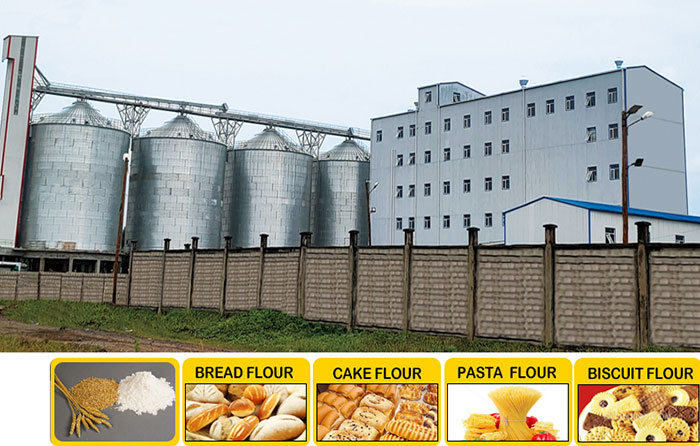
Several critical factors determine flour quality in a wheat flour milling plant:
1. Wheat Quality
Raw wheat quality is the foundation of premium flour production. Important wheat characteristics include:
Protein content
Moisture level
Gluten strength
Kernel hardness
Purity
Falling number
Foreign material percentage
Using mixed or poor-quality wheat can negatively affect flour consistency.
Best Practice
Source wheat from reliable suppliers
Conduct incoming wheat inspections
Separate wheat by quality grades
Use wheat blending systems for stable flour performance
2. Efficient Wheat Cleaning
Before milling, wheat must be thoroughly cleaned to remove impurities such as:
Stones
Dust
Straw
Metal particles
Seeds
Sand
Damaged grains
Advanced wheat cleaning systems improve flour purity and protect milling equipment.
Recommended Cleaning Equipment
Vibrating screens
Destoners
Magnetic separators
Gravity separators
Wheat scourers
Air aspiration systems
A well-designed cleaning section significantly improves flour color and food safety.
Importance of Wheat Conditioning
Wheat conditioning, also called tempering, is essential for improving milling performance.
During conditioning:
Moisture is added to wheat
Bran becomes tougher
Endosperm softens
Bran separation improves
This process helps produce whiter flour with lower ash content.
Optimal Conditioning Parameters
Wheat Type
Moisture After Conditioning
Proper conditioning reduces bran powder contamination and improves flour extraction rates.
Modern flour milling machines play a major role in flour quality improvement.
1. High-Precision Roller Mills
Efficient roller mills ensure:
Uniform grinding
Reduced starch damage
Better particle size control
Stable flour quality
Important Features
Automatic feeding systems
Temperature control
Accurate roll gap adjustment
Durable rollers
2. Plansifters
Plansifters separate flour particles by size and purity.
High-quality plansifters help:
Improve flour uniformity
Reduce bran contamination
Increase flour extraction efficiency
Proper sieve maintenance is equally important.
3. Purifiers
Purifiers remove fine bran particles from semolina.
Benefits include:
Lower ash content
Improved flour whiteness
Better flour texture
Purifiers are especially important for premium flour production.
Process control is critical for flour consistency.
Key Parameters to Monitor
Roll Gap Adjustment
Incorrect roll gaps can cause:
Excessive starch damage
Poor flour texture
Bran contamination
Grinding Pressure
Balanced grinding pressure improves flour fineness without overheating.
Milling Temperature
High temperatures may damage flour quality and gluten functionality.
Sifting Efficiency
Poor sifting reduces flour purity and increases ash content.
Improve Flour Ash Control
Ash content is a major quality indicator in flour milling.
Lower ash flour is generally:
Whiter
Cleaner
Preferred for bakery applications
How to Reduce Ash Content
Improve wheat cleaning
Optimize tempering
Use efficient purifiers
Control bran separation
Maintain precise roll settings
Advanced milling automation systems help stabilize ash levels during production.
Maintain Proper Moisture Control
Moisture management affects both flour quality and shelf life.
Risks of Incorrect Moisture
Excess Moisture
Mold growth
Short shelf life
Storage problems
Low Moisture
Reduced flour yield
Poor baking performance
Recommended Flour Moisture
Most flour products maintain moisture levels between 13% and 14.5%.
Using online moisture analyzers helps ensure consistent production quality.
Professional flour testing laboratories are essential for modern wheat flour milling plants.
Common Flour Quality Tests
Protein analysis
Moisture testing
Ash analysis
Gluten testing
Falling number testing
Particle size analysis
Dough rheology testing
Regular testing helps mills maintain product consistency and meet customer specifications.
Food safety standards are becoming stricter worldwide.
Flour mills should implement:
HACCP systems
Dust control systems
Metal detection systems
Sanitary equipment design
Pest control management
Clean production environments improve flour safety and brand reliability.
Automation technologies greatly improve production consistency.
Benefits of Automated Flour Milling Systems
Precise process control
Stable flour quality
Lower labor costs
Reduced operational errors
Real-time monitoring
Better traceability
Modern PLC control systems allow operators to optimize every stage of flour production.
Poorly maintained equipment can reduce flour quality and production efficiency.
Maintenance Recommendations
Inspect rollers regularly
Replace damaged sieves
Lubricate moving parts
Clean pneumatic systems
Monitor bearing temperatures
Calibrate sensors and automation systems
Preventive maintenance minimizes downtime and stabilizes flour production quality.
Even advanced equipment requires skilled operators.
Operator training should focus on:
Wheat blending techniques
Roll adjustment
Sifting optimization
Quality testing procedures
Equipment troubleshooting
Food safety compliance
Experienced operators can quickly identify production problems before they affect flour quality.
Efficient energy management also supports stable milling performance.
Energy Optimization Strategies
Use high-efficiency motors
Optimize pneumatic conveying systems
Reduce unnecessary machine idle time
Maintain airflow balance
Install energy monitoring systems
Stable machine operation contributes to consistent flour output.
The flour milling industry continues to evolve with new technologies.
Emerging Trends
Smart Flour Milling Plants
AI and IoT systems help mills achieve predictive maintenance and real-time quality optimization.
Digital Quality Monitoring
Automated sensors continuously monitor flour characteristics during production.
Sustainable Milling Solutions
Energy-saving and environmentally friendly milling technologies are gaining popularity.
Customized Flour Production
Food manufacturers increasingly demand customized flour specifications for specific applications.
Improving flour quality in a wheat flour milling plant requires a combination of premium raw materials, advanced milling equipment, precise process control, and strong quality management systems.
Key improvement strategies include:
Selecting high-quality wheat
Optimizing wheat cleaning and conditioning
Using advanced roller mills and plansifters
Monitoring ash and moisture levels
Implementing automation systems
Conducting regular flour testing
Maintaining equipment properly
Training operators effectively
By continuously optimizing production processes, flour milling plants can achieve higher flour consistency, better customer satisfaction, increased profitability, and stronger competitiveness in the global market.
As the food industry demands higher standards, modern wheat flour milling plants that prioritize quality improvement will gain significant long-term advantages.

Copyright © Hebei Pingle Grain Technology Intelligent Equipment Co.ltd. All Rights Reserved | Sitemap | Technical Support: 

 English
 русский
 فارسی
فارسی Português
 français
 عربى
عربى España